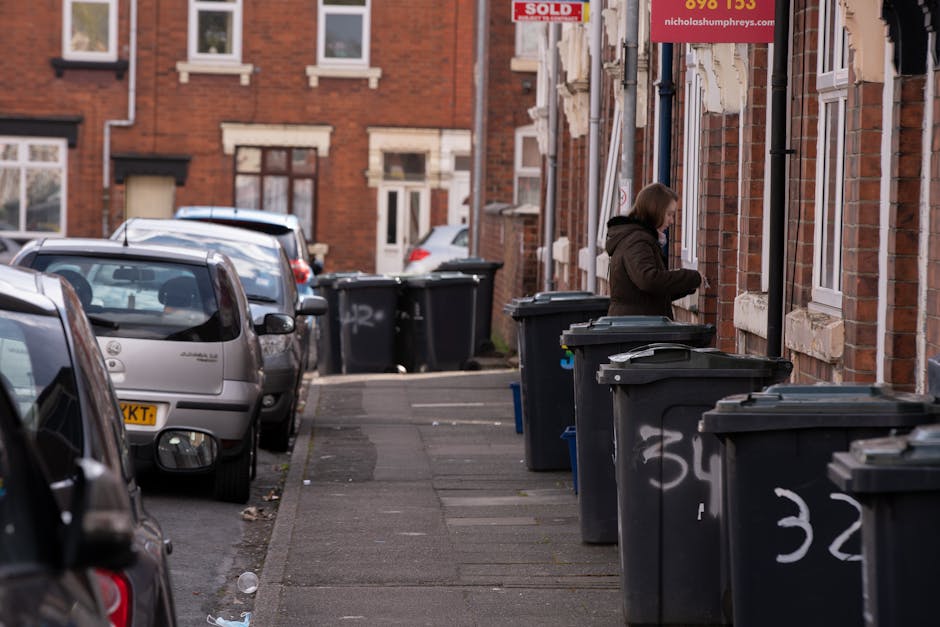
Charlton rubbish removal guide for Woolwich Road residents

If you live on Woolwich Road, you already know the rhythm of the area: busy mornings, tight kerbs, parked cars that seem to appear out of nowhere, and not much patience for clutter piling up outside your door. That is exactly why a clear Charlton rubbish removal guide for Woolwich Road residents matters. Whether you are clearing a flat, shifting builders' waste, emptying a garage, or dealing with a sudden pile of unwanted items, the right waste solution saves time, reduces stress, and helps you avoid awkward mistakes. A good plan also keeps your street tidy, which is no small thing on a road like this.
This guide walks through how rubbish removal works, when to choose a skip or a collection service, what to avoid, and how to stay on the right side of local rules and best practice. It is written for real life, not ideal conditions. Because let's face it, rubbish rarely appears at a convenient moment.
- Why it matters on Woolwich Road
- How rubbish removal works
- Key benefits and practical advantages
- Who this is for and when it makes sense
- Step-by-step guidance
- Expert tips for better results
- Common mistakes to avoid
- Tools, resources and recommendations
- Law, compliance, standards and best practice
- Options and comparison table
- Case study or real-world example
- Practical checklist
- Conclusion
- Frequently asked questions
Why Charlton rubbish removal guide for Woolwich Road residents Matters
Woolwich Road has its own set of practical challenges. Properties can be close together, access can be awkward, and waste needs often come up fast after a move, a renovation, or a clear-out you have been putting off for months. In that setting, the difference between a smooth job and a frustrating one often comes down to choosing the right removal method from the start.
It matters because waste is not just a visual problem. Mixed rubbish can block shared access, create safety issues, attract complaints from neighbours, and lead to extra charges if it is not sorted properly. If you are dealing with household junk, renovation rubble, or bulky items, it helps to know whether you need a skip, a collection team, or a more flexible service such as rubbish removal or man and van.
There is also the time factor. In a busy part of Charlton, leaving waste waiting on the pavement is not ideal. It may seem harmless for a day or two, but the weather changes, bags split, and suddenly you are sweeping up bits of packaging in the rain. Nobody wants that. A proper plan avoids all of it.
Practical summary: if your waste is bulky, mixed, or urgent, planning early is usually cheaper and less stressful than improvising on the day.
How Charlton rubbish removal guide for Woolwich Road residents Works
Rubbish removal is straightforward once you break it down. First, you identify the type and volume of waste. Then you decide whether the material can go into a skip, whether it needs a man-and-van style collection, or whether another service is better suited. That decision matters more than people think, because not all waste behaves the same way. Heavy rubble, mattresses, garden cuttings, and household furniture each create different loading and disposal requirements.
For many Woolwich Road residents, the easiest route is to compare a few common options. A standard skip is useful when you are generating waste over a few days or weeks, especially if you are doing work yourself. A collection service is better when access is tight or when you want everything taken away in one visit. For fast turnarounds, a same-day option can be helpful, especially if waste is already stacked in a hallway or front garden and needs moving quickly. You can look at same-day skip hire for urgent situations.
If the waste is mainly domestic, a domestic skip hire solution can be a good fit. If the job is more specialised, such as a garage clean-out, a loft clear-out, or a family house clearance, you may need a slightly different mix of services. The point is not to force one method onto every problem. The point is to match the job to the least disruptive, most efficient option.
And yes, access makes a big difference. Woolwich Road traffic, parking, and pavement space can all affect how a skip or vehicle is placed. If the waste needs to be loaded and removed quickly, wait and load skip hire can be a neat solution because the vehicle does not sit around for long.
Key Benefits and Practical Advantages
The biggest benefit is control. Instead of letting waste spread from room to room, or from the back garden into the front drive, you get one organised removal plan. That can make a renovation feel half as chaotic straight away.
- Cleaner access: less clutter around entrances, paths, and shared spaces.
- Faster progress: no waiting around with bag after bag of waste.
- Better safety: fewer trip hazards, sharp edges, and unstable piles.
- More suitable for mixed waste: ideal when you have a combination of items rather than one tidy material stream.
- Improved cost control: a well-sized service can be cheaper than repeated small trips to disposal points.
There is also a quieter, practical benefit: peace of mind. If you know your waste is booked, permitted, and handled properly, you stop thinking about it every time you open the front door. That sounds small, but it is a real relief.
Another advantage is recycling. Responsible waste handling should aim to separate and recover as much as possible. If sustainability matters to you, it is worth asking about recycling and sustainability and how different waste streams are sorted after collection.
Who This Is For and When It Makes Sense
This guide is useful for a wide mix of people. You might be a homeowner replacing a kitchen, a tenant moving out, a landlord clearing a flat, or a tradesperson dealing with builders' rubble after a small job. You might also simply have too much stuff. That happens more often than people admit.
It tends to make sense when:
- you have more waste than a normal bin collection can handle;
- you are clearing bulky items like old furniture or appliances;
- you have mixed materials from a DIY project;
- your property access is tight and you need a service that works around parking restrictions;
- you want a one-off clear-out without making several trips yourself.
For domestic jobs, the sweet spot is often a skip hire arrangement or a removal team, depending on how much you are throwing away and how long the waste will take to accumulate. For larger clearances, such as lofts, garages, and inherited household contents, services like garage and loft clearance or house clearance can save a lot of effort.
Commercial users are in a slightly different category. Offices, shops, and workspaces often need quicker turnarounds and more careful handling of mixed materials. In those cases, commercial skip hire or office clearance may be more appropriate.
Step-by-Step Guidance
If you want to keep things simple, follow this process. It is not glamorous, but it works.
- Identify the waste type. Separate general household rubbish, heavy rubble, garden waste, appliances, furniture, and anything possibly hazardous.
- Estimate the volume. Use room space, bin bags, or stacked boxes as a rough visual guide. If you are unsure, go slightly larger than you first think. People often underestimate, then regret it on delivery day.
- Check access. Consider where a vehicle can stop, whether a skip can sit safely, and whether nearby parking is likely to be a problem.
- Decide on the method. Choose between skip hire, man and van, grab hire, or wait-and-load based on space, timing, and waste type.
- Confirm what can be loaded. Review the allowed materials with what can go in a skip so you avoid contaminating the load.
- Plan for special items. Fridges, freezers, sofas, mattresses, confidential documents, and some hazardous materials usually need separate handling. Look at fridge and appliance removal, mattress and sofa disposal, and confidential shredding where relevant.
- Check whether a permit is needed. If the skip will sit on a public road, you may need a permit. More on that below.
- Book and prepare. Clear access, move cars if needed, and keep waste together so loading is quick and safe.
A small but useful tip: if you are sorting over a weekend, leave a little space for the last-minute bits. There is always a rogue lamp shade, a broken shelf, or a bag of cable ties nobody remembered. Always.
Expert Tips for Better Results
After enough clear-outs, a few habits stand out. First, sort as you go. If you throw everything into one pile, the loading day becomes slower and messier. Separate items into broad groups: reusable, recyclable, bulky, and general waste. That makes the job easier for everyone.
Second, think about weight as much as volume. Builder's rubble, soil, tiles, and masonry get heavy very quickly. A skip can look half empty and still be close to weight limits. That is one reason why services such as builders skip hire and builders waste removal are often recommended for refurbishment jobs rather than general domestic solutions.
Third, use the right disposal method for access conditions. Narrow frontages, no driveway, and heavy foot traffic can make a traditional skip less convenient. In those situations, grab hire services or grab lorry hire can be a better fit because they work well when loading space is awkward.
Fourth, be honest about time. If you need the waste gone today, say so early. If you need a lockable container for security reasons, consider enclosed and lockable skip hire. If you are clearing a site or preparing for construction work, specialised services like construction waste disposal and site clearance can be more efficient than a basic mixed-waste approach.
Common Mistakes to Avoid
The most common mistake is choosing the wrong service for the access you have. A skip might seem obvious, but if the road space is tight and the permit situation is unclear, the day can become unnecessarily stressful. A second mistake is overfilling. It is tempting to squeeze in one more bag, but overloading creates safety and collection problems.
Another frequent slip is mixing prohibited or awkward materials with general waste. Items like certain chemicals, paint, gas cylinders, and some electrical items need special attention. If you are uncertain, ask before loading. It saves embarrassment later, and potentially money too.
People also underestimate how quickly waste expands. Flattened boxes are one thing; unflattened boxes are another entirely. Old furniture, broken shelving, and packaging can swallow the available space very fast. A pile that looked small on Tuesday can become a mountain by Thursday morning. Human nature, really.
Finally, do not ignore paperwork or service terms. You do not need to drown in fine print, but you should understand what is included, what is excluded, and what happens if access changes on the day. For that, it helps to review terms and conditions and payment and security before booking.
Tools, Resources and Recommendations
You do not need a shed full of gear to manage waste properly, but a few simple tools help.
- Heavy-duty gloves: useful for sharp packaging, splintered wood, and rough edges.
- Bin bags and rubble sacks: good for pre-sorting lighter waste and keeping spaces tidy.
- Tape measure: handy when comparing skip sizes or judging furniture clearance.
- Basic labels or markers: useful for identifying items to keep, donate, recycle, or discard.
- Phone camera: surprisingly useful for documenting access points, waste piles, and item types if you need advice before booking.
If you are comparing disposal routes, use the business pages as a guide to match the job with the right method. Skip sizes and prices can help when you need to estimate capacity, while pricing and quotes is useful if you want a clearer view of cost before making a decision. If the job involves regular waste from a workplace, commercial skip hire is worth reviewing again because the needs are often different from domestic clear-outs.
For one-off household projects, domestic skip hire remains a sensible place to start, especially if you want predictable timing and a clear loading window.
Law, Compliance, Standards, or Best Practice
This is one of those areas where a little care goes a long way. In the UK, waste should be handled responsibly, and it is sensible to work only with services that can explain how your rubbish will be managed after collection. You do not need to become a compliance expert overnight, but you should expect clear communication about what happens to your waste, especially if it includes electrical items, mattresses, sensitive paper, or materials that may require specialist handling.
If a skip or container needs to be placed on a public highway, a permit may be required. Requirements can vary depending on the location and the placement, so it is best not to guess. If in doubt, review skip hire permits and skip permits before you book. The same goes for health and safety expectations: waste should be loaded so it is stable, not sticking out dangerously, and not creating unnecessary risk for pedestrians or road users.
For business waste, data security can matter as much as physical disposal. That is where confidential shredding and clear chain-of-handling practices become relevant. It is not dramatic, just sensible. If you are emptying an office or clearing sensitive paperwork, look at office clearance and confidential shredding.
You should also look for providers that explain safety practices plainly. Pages such as health and safety policy, insurance and safety, and about us can help build trust, especially if you are booking for the first time.
Options, Methods, or Comparison Table
There is no single best way to remove rubbish in Charlton. The right choice depends on waste type, access, urgency, and volume. Here is a practical comparison to help you decide.
| Method | Best for | Main advantage | Main limitation |
|---|---|---|---|
| Skip hire | DIY projects, ongoing clear-outs, mixed waste | Flexible loading over time | Needs space and may need a permit |
| Rubbish removal | Bulky household items, quick clearances | No need to load a skip yourself | Can be less suitable for very large volumes |
| Wait and load | Tight streets, short-term access, no long placement | Fast and efficient on constrained roads | Requires you to be ready when the vehicle arrives |
| Grab hire | Heavy, loose, or awkwardly stacked waste | Good reach and fast loading | Needs practical access for the grab vehicle |
| Man and van | Smaller loads, flats, quick household jobs | Very flexible and personal service | Not ideal for heavy builder's rubble in large quantity |
If you are still unsure, a useful rule of thumb is this: if you are generating waste gradually, go for a skip. If you want everything gone in one clean sweep, a collection service may be simpler. If you have awkward access, think twice before choosing the option that assumes lots of room.
Case Study or Real-World Example
Imagine a Woolwich Road resident doing a small kitchen refresh in a terrace property. The old units are out, the tiles have been chipped away, and there is a mix of broken plaster, packaging, timber offcuts, and one stubborn fridge that nobody wants to move twice. The first instinct might be to throw everything into a pile on the pavement and deal with it later. That rarely ends well.
Instead, the resident sorts the waste into three groups: general waste, heavy rubble, and items that need separate handling. The fridge is booked for appliance removal, the mixed building waste is assessed for a skip, and the remaining bulky items are loaded through a rubbish removal service. Because the road is busy and parking is tight, a permit check is made early. The waste is gone in stages, not all at once, but the job stays calm and organised.
That kind of approach saves arguments with neighbours, avoids overfilling, and keeps the project moving. It is not especially exciting, but it works. In our experience, the least dramatic jobs are usually the best planned ones.
Practical Checklist
Use this checklist before you book your waste removal service.
- Identify the main waste type or waste mix.
- Estimate the amount in bags, boxes, or room space.
- Check whether the waste includes heavy rubble, appliances, furniture, or sensitive documents.
- Confirm access for vehicles, loading, and parking.
- Decide whether a skip, man and van, grab hire, or wait-and-load service is the best fit.
- Review what can and cannot go in the chosen container.
- Check whether a permit may be needed if the skip goes on the road.
- Ask about recycling, sorting, and responsible disposal.
- Read the service terms so there are no surprises.
- Keep the waste area clear so collection is quick and safe.
A simple checklist like this sounds basic, but it stops most of the common headaches before they start.
Conclusion
For Woolwich Road residents, rubbish removal is less about theory and more about making a busy, constrained street work for real people with real mess. The best solution depends on your access, timing, waste type, and how much effort you want to spend loading and sorting. Once you understand the options, the process becomes much easier to manage.
The main thing is to plan early, choose the right method, and stay realistic about the volume and type of waste you have. That approach saves money, reduces friction, and keeps your property feeling manageable instead of overwhelmed. And honestly, that little bit of order can make a big difference when life is already full enough.
If you are ready to take the next step, explore the relevant service pages, compare your options carefully, and book the method that matches your property and schedule. Small decision, big relief.
Get a free quote today and see how much you can save.
Frequently Asked Questions
What is the best rubbish removal option for a Woolwich Road property?
It depends on access and waste type. For ongoing DIY work, a skip is often the most practical choice. For bulky items or fast clearances, rubbish removal or man and van can be easier.
Do I need a permit for a skip in Charlton?
If the skip is placed on a public road or highway, a permit may be required. It is best to check before booking rather than assume the placement is allowed.
Can I put mixed household waste in a skip?
Usually yes, provided the materials are accepted by the service and you do not mix in restricted items. It helps to review what can go in a skip before loading anything.
What should I do with a fridge, freezer, or other appliance?
Appliances are best handled separately. Services such as fridge and appliance removal are more suitable than putting them into general waste.
Is wait and load a good idea on a busy road?
Yes, it can be very useful where space is limited and you do not want a container sitting out for long. The key is to be fully ready when the vehicle arrives.
How do I know whether I need grab hire instead of a skip?
Grab hire is often better for heavy, loose, or awkwardly stacked waste when access allows a grab vehicle to reach the material. It is especially useful for larger clearances.
What happens if I overfill the skip?
Overfilling can create safety issues and may prevent collection. It is safer to choose the right size upfront than to try to squeeze in too much at the end.
Are mattresses and sofas accepted with normal rubbish?
They may need separate handling depending on the collection method. Dedicated mattress and sofa disposal is usually the cleaner and safer option.
Can businesses use the same services as homeowners?
Yes, but commercial waste often benefits from more tailored arrangements. Commercial skip hire or office clearance is usually more appropriate than a one-size-fits-all approach.
How can I keep rubbish removal costs sensible?
Estimate accurately, separate waste properly, avoid unnecessary collections, and choose the method that matches your access. Comparing pricing and quotes before booking is also a smart move.
What if I am not sure what my waste is classified as?
If you are unsure, ask before booking. A quick explanation of the waste type is usually enough to point you to the right service and avoid mistakes later.
Where can I find more information about the company and its standards?
Helpful pages include about us, health and safety policy, insurance and safety, complaints procedure, and recycling and sustainability. They give you a clearer view of how the service is run and what to expect.